The History Underlying Sweat
Lynn Nottage's Sweat is ostensibly about factory workers in Reading, Pennsylvania, but its true subject is the breaking of the American Promise. To fully appreciate the play, one must understand Reading itself and others just like it- a city built by industry and shaped by successive waves of migration.
Reading grew in the nineteenth century as a transportation hub and manufacturing center. Canals and the railway helped connect it to regional markets and accelerated its emergence as an industrial city. Over time, it became known for iron, textiles and hosiery, and food manufacturing; including the pretzel industry for which it is still famous. This industrial basis did not merely provide jobs. It also helped to shape civic identity and create the belief that factory labour offered permanence and stability, if not upward mobility.
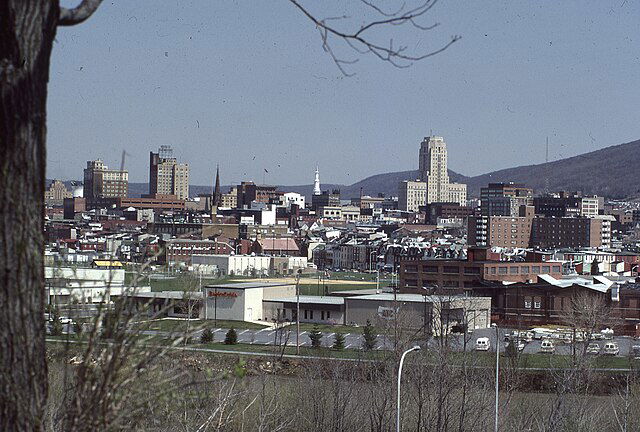
Yet this economic prosperity was never racially neutral. Nineteenth-century Reading was heavily shaped by German and other European settlers, many of whom were gradually incorporated into the category of "white" America. In the twentieth century, Black Americans arrived as part of the broader "Great Migration", seeking work and relief from the Jim Crow South, only to encounter discrimination in housing, employment, and public life. Later, Puerto Rican and other Latin American migration transformed Reading and Berks County, especially as employers drew on migrant labour in agriculture and manufacturing. The city gradually became more non-white, with the 2000 census indicating a population of 48.27% White, 37.3% Hispanic and 12.2% Black.
Demographics matters in Sweat because the play is not simply about economic decline. It is about what happens when that downturn is experienced through the fault lines of race. Factory floors and unions could foster a sense of solidarity, but they did not erase hierarchy, unequal advancement, or exclusion. White workers experienced the loss as a stripping away of something they believed was theirs by right. On the other hand, Black and Latino workers faced bitterness and resentment in never having been fully admitted to the American promise in the first place.
By the late twentieth century, the economic base that had sustained Reading for generations began to erode. The deterioration was gradual at first, then unmistakable. The railroad system that had helped build the city went bankrupt in the 1970s as factories shed jobs, moved operations, or began to demand concessions under growing competitive pressure. Reading was not hollowed out overnight, but the myth that factory work could guarantee stability began to crack.
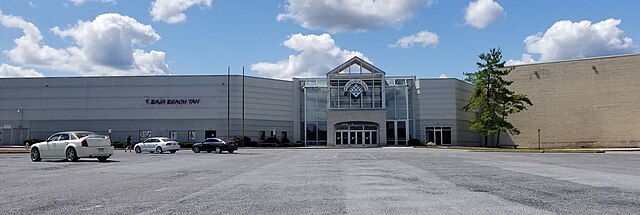
NAFTA became the symbol of that rupture. It would be a lie to say that one trade agreement caused Reading's misery. The manufacturing losses reflected a mix of trade, automation, and corporate restructuring. Still, the Agreement came to represent a world where companies could threaten relocation, supply chains became globalised, and workers discovered that loyalty did not guarantee security. In Sweat, this sense of betrayal is not some academic characterization, but is deeply felt as humiliation, suspicion and fear.
This is the world of the play, which moves between 2000 and 2008. At the start of the decade there was still enough stability for many workers to still have faith that the old order might survive, but by 2008, the financial crisis had collided with years of industrial decay. The force of Sweat is watching economic security disappear in real time.
In 2011, Reading was named the poorest small city in America with a 41.3% poverty rate. The Reading of today is neither a ghost town nor a simple comeback story and it remains one of the poorest cities in America. Manufacturing still matters, but the regional economy is more mixed, with health care, logistics, and warehousing playing larger roles.
Reading is not merely a backdrop for Sweat. It is but an instance of a reality that is still playing out throughout America; one that resonated with voters in the 2016 and 2024 presidential elections and one that will surely be felt in the USMCA negotiations.